
TWI 2.0: how to modernize Training Within Industry for today’s industry?
Digital, AI, changing workstations, increasingly complex machines: how can TWI's principles be extended to meet the new challenges of transferring industrial know-how?
TWI alone is no longer enough
Training Within Industry laid the foundations for structured, on-the-job knowledge transfer back in the 1940s. While the method remains relevant today, the industrial environment in which it must be applied has changed profoundly.
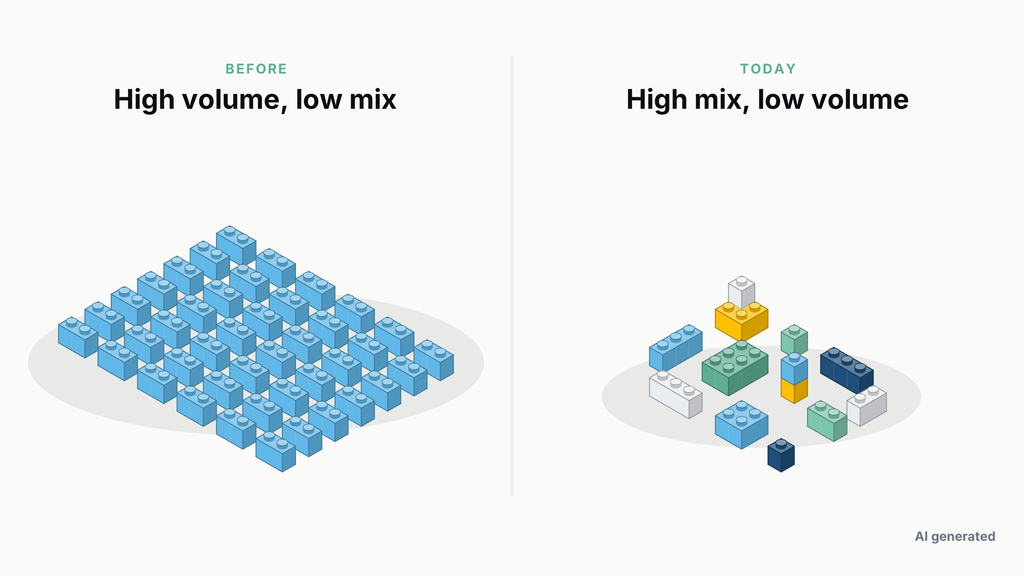
TWI was born in a high-volume, low-mix industrial world: long production runs, few variants and workstations dedicated to a single task. One operator would drill the same hole 2,000 times a day, another would move the parts, and a third would assemble them.
Today, by contrast, manufacturers often operate in high-mix, low-volume environments, with more products and processes under one roof. A single workstation may rely on a shared core of job skills, plus many specific operations. On the shop floor, we see technical workstations drawing on 10 to 20 different areas of know-how, whereas the original TWI dealt with just one. Operators are expected to be far more versatile than they once were.
Machines have evolved too: automated equipment, digital interfaces and AI-driven systems demand much more advanced skills.
From individual tasks to complex activities
TWI’s Job Instruction (JI) offers an essential first answer: to be transferred properly, an individual task must be broken down into Important Steps, Key Points and Reasons Why.
In today’s industrial environments, however, this breakdown is more complex. You first need to identify all the know-how a job role requires, distinguish generic skills (job basics) from those specific to a product, process or variant, and know who has actually mastered what.
This is the purpose of the know-how tree developed by Hapster. The methodology structures the skills of a job role and links them to the workstations, operations and people who master them. Knowledge transfer is approached as a coherent set of skills needed for safety, quality and productivity.
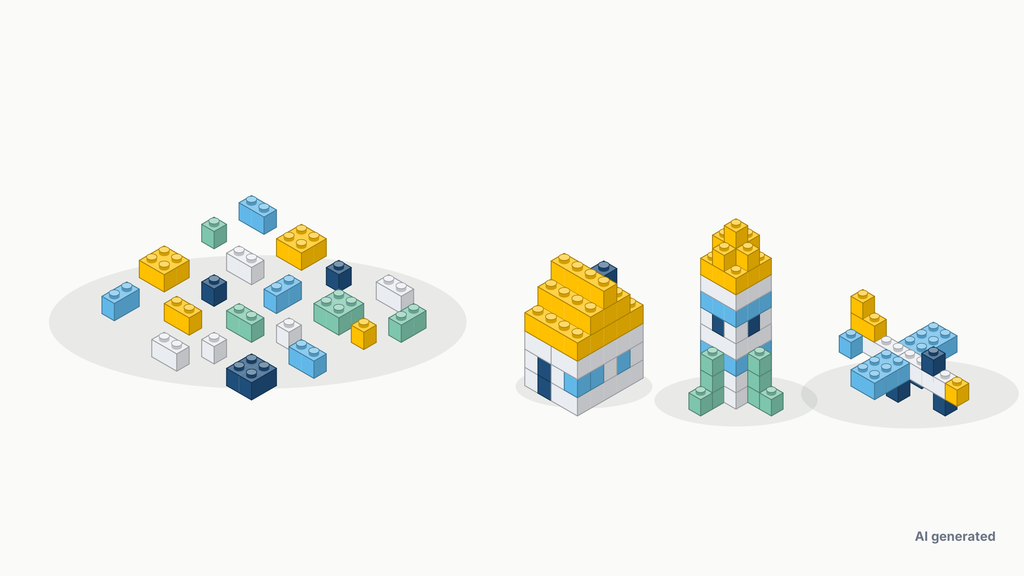
The principle is much like LEGO® bricks: the same twenty bricks can build a house, a train, a plane or a rocket. The bricks are the basic units of know-how, and the models are the products and processes. Operators master a common foundation and acquire the skills specific to each new variant more quickly.
Versatility becomes multi-skilling.
Going further in making gestures explicit
TWI had already identified a fundamental principle: demonstrating a gesture is not enough. Experts must also explain their best practices and why they are critical.
Yet much of industrial know-how remains hard to put into words: a certain hand pressure, a resistance felt, a sound, an angle, a rhythm or a visual cue can determine whether an operation succeeds, without the expert thinking to mention it.
This is the tacit dimension, which accounts for 60% of all knowledge.
Hapster’s gesture grammar builds on this effort to make know-how explicit. It helps experts describe not only what they do, but also how they do it, what they see, hear or feel, and why it matters.
The role of digital: capitalizing on knowledge, making it available and scaling up
In the TWI model, knowledge transfer relies mainly on direct interaction between the person who has the knowledge and the person learning it. This human interaction remains essential.
Digital and AI now extend this interaction and free up experts more quickly. Digitalization turns know-how into short, structured learning content, available in a range of formats and captured directly on the shop floor.
Finally, as for scaling up, TWI had already solved part of the challenge through cascade training. Digital goes further: knowledge stays available over time and across all sites, whether or not the person who holds it is present. Content is updated as soon as a process changes and is rolled out everywhere at once.
TWI 2.0: the right hand of industrial sovereignty
The core principles of Training Within Industry remain essential: break down, make explicit, demonstrate, practice and verify.
Eighty years on, it is time to adapt these visionary principles to the modern industrial world and build on them to meet the demands of a more complex, more diverse and faster-moving industry. This need extends beyond the shop floor, to the knowledge of support functions and white-collar staff.
Mapping know-how, capturing its tacit dimension more effectively, accelerating content creation with AI, digitalizing that content and managing its distribution are now the natural extensions of this approach, delivering a step change in performance and strengthening industrial sovereignty..
From the blog to a pilot.
Do these challenges resonate with you? Start a pilot focused on one of your critical areas of know-how.